How Do You Price Your Farm Products With Confidence?
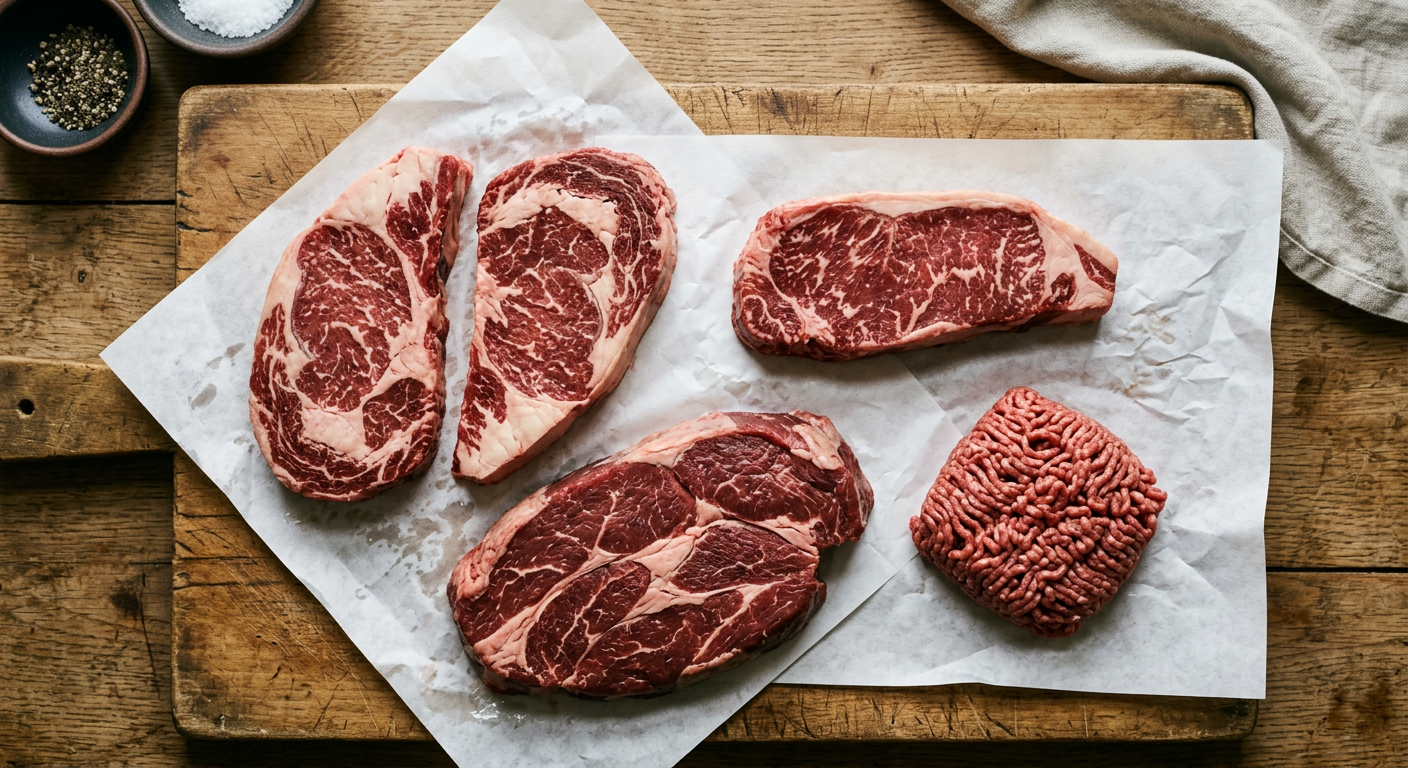
You price your farm products with confidence by starting from your real costs, not a competitor's price tag or a number that "feels right." Add up what it actually costs to raise, process, and deliver your product, pay yourself for your labor, then build in a margin. Do that, and the fear goes away, because the number is true.
Here is the thing most farmers never hear: the biggest pricing mistake is not charging too much. It is charging too little. Small producers all over the country are selling really nice meat for close to the price of dog food, because that is all they think they can get. You raised something honest. You deserve a retail price for it. This guide shows you exactly how to set that price, using grass-fed beef as the working example, and the same method works for pork, eggs, produce, and anything else you sell direct.
The short answer: Price your beef from your real costs, not a guess. Total what it costs to raise, process, package, and deliver each animal, add your own labor, then divide by your take-home (packaged) pounds, not live or hanging weight. Add your margin on top. That number is your honest, profitable price, and you can defend every penny of it.
Why Does Pricing Feel So Hard for Farmers?
Because you were trained to grow food, not to sell it. Growing is the hard-won skill you already have. Pricing feels like guesswork, so a lot of good farmers freeze, copy the farm down the road, or quietly undercharge because they "don't want to scare people off."
That instinct is understandable, and it is also the trap. When you underprice, you do not sell more, you just work harder for less and burn out faster. Confident pricing is not about squeezing your customers. It is about knowing your own numbers so well that you can look someone in the eye, say the price out loud, and mean it. Customers can feel the difference between a farmer who is guessing and a farmer who knows.
The fix is a repeatable method. Once you have one, pricing stops being a knot in your stomach and becomes a two-minute calculation. Let's build it.
What Is the Difference Between Live Weight, Hanging Weight, and Take-Home Weight?
These are the three weights every beef seller has to understand, because pricing on the wrong one is how farmers accidentally give away money and how customers end up feeling misled at pickup.
- Live weight (also called "on the hoof") is what the animal weighs alive, standing in your pasture.
- Hanging weight (also called "carcass" or "dressed" weight) is what the carcass weighs after harvest, once the hide, head, and organs are removed. It is what the processor weighs before cutting.
- Take-home weight (also called "packaged," "finished," or "cut weight") is the actual boxes of meat that go in your customer's freezer, after cutting, deboning, trimming, and aging.
Each step loses weight, and that loss is normal, not waste. Here is the rule of thumb, grounded in university extension data:
| Weight type | What it measures | Typical yield | Example (1,200 lb steer) |
|---|---|---|---|
| Live weight | The animal on the hoof | 100% (starting point) | 1,200 lb |
| Hanging weight | Carcass after harvest | About 60% of live weight | ~720 lb |
| Take-home weight | Packaged meat in the freezer | About 60–75% of hanging weight | ~430–540 lb |
So a 1,200-pound steer that hangs at roughly 720 pounds comes home as somewhere around 430 to 540 pounds of actual meat, or close to 40% of the live weight. Grass-finished animals often sit at the leaner end of these ranges, and the cuts your customer chooses move the number too: more bone-in steaks means fewer total pounds, more ground beef means more. The University of Wisconsin Extension publishes clear yield breakdowns if you want to dial in your own herd's numbers.
Why this matters for pricing: not all ranchers sell on hanging weight, and you do not have to. Ranchers price several different ways, and every one of them is legitimate:
- A flat per-share price: "$1,500 for a quarter, here is everything in the box." Simple, and the customer knows the exact number up front.
- Per take-home pound: you price the actual packaged meat, which is what most retail buyers understand best.
- Per hanging pound: the traditional bulk model, most common on whole and half shares where the customer pays the processor directly for cut and wrap.
- By the individual cut: ribeyes at one price, ground at another, sold piece by piece.
Hanging weight is just one option among these, not the default. The trap is only this: if you quote a hanging-weight price but your customer is picturing take-home pounds, the sticker shock at pickup can cost you the repeat sale. So whichever model you choose, choose it on purpose and explain it up front. For everyday retail buyers, a flat per-share price or a take-home-pound price is usually the cleanest, because there is no gap to explain later.
What Is the Right Formula to Price Grass-Fed Beef?
Use cost-plus pricing. You total every real cost, spread it across the pounds you can actually sell, then add your margin. Here is the formula in plain terms:
(Cost to raise + Processing + Packaging + Your labor) ÷ Take-home pounds = your break-even per pound. Then add your margin.
Notice where yield loss lives in that formula. It is not a bill you pay, it is simply fewer pounds to sell, so you handle it by dividing across take-home pounds, not live or hanging pounds. That one move is what most underpricing farmers get wrong. They divide by the big number and quietly eat the loss.
Let's walk each piece, using illustrative round numbers so you can drop in your own.
Step 1: Cost to raise the animal
Everything it took to get that steer to finish weight: the calf or its value, pasture and hay, minerals and feed, vet and minerals, water, fencing wear, and a fair share of your fixed costs like land and equipment. If your all-in cost to raise one animal is, say, $1,900, start there. If you have never totaled this, that is your first homework, and it is the single most valuable number in your business.
Step 2: Processing
The harvest (kill) fee plus cut and wrap. On a 720-pound carcass, cut and wrap commonly runs somewhere around $0.75 to $1.00 per hanging pound plus a flat kill fee, so call it roughly $750 per head. Check your own locker's current schedule, because this varies by region and books up fast.
If you ship: don't forget packaging
Here is a cost almost every new shipper leaves out, and it stings. The boxes, the insulated liners, the frozen gel packs or dry ice, the tape and labels, all of it is real money. Packaging for frozen shipping can add as much as $1 per pound to your cost. On a quarter, that is over a hundred dollars you were about to eat. If you sell by freezer pickup only, your packaging is basically the butcher paper and vacuum bags, so it is small. But the moment you ship, put a real number on it and fold it into your price, the same way you did with processing. For the pickup example below we will leave packaging at $0, but if you ship, add your per-pound packaging cost right into the formula.
Getting fulfillment packaging right, cold chain, box sizes, cost per box, is fiddly, and it is one of the things we help farms sort out so your beef arrives frozen and your margin survives the trip. If shipping is on your roadmap, get ahold of us.
Step 3: Your labor
Hauling, scheduling, coordinating cuts, storage, delivery, and the marketing and admin time to sell the animal. This is the line farmers skip, and skipping it means you are working for free. Extension economists note that a farmer's own labor is often 30 to 40% of true production cost. Put a real number on your hours. Say $350 per head.
Step 4: Total, then divide by take-home pounds
$1,900 + $750 + $0 packaging (pickup) + $350 = $3,000 per animal. Divide by roughly 470 take-home pounds:
$3,000 ÷ 470 = about $6.38 per pound. That is your break-even. At exactly that price, you have covered every cost including your own time, and made zero profit.
Step 5: Add your margin
A common target for direct-to-consumer food is to keep your cost of goods below half your sale price, which means a blended price roughly double your break-even. At a 45% gross margin, the math is break-even ÷ (1 − margin), so $6.38 ÷ 0.55 = about $11.60 per take-home pound, blended across all cuts.
That blended number is the anchor for everything else: your whole, half, and quarter prices, and your per-cut prices. Cornell Small Farms has a solid primer on cost-plus pricing if you want to go deeper on the accounting side.
How Do You Price a Whole, Half, and Quarter?
Take your blended per-pound price and multiply by the take-home pounds in each share. Then nudge the smaller shares up slightly, because a quarter takes just as much of your time to coordinate as a half, and you are assembling a balanced box of cuts for them. You can run all of this in seconds with our free Farm Pricing Calculator, which does the whole, half, and quarter math for you.
| Share | Take-home pounds (approx.) | At ~$11.60/lb blended | Rounded price you might list |
|---|---|---|---|
| Whole | ~470 lb | ~$5,450 | $5,400–$5,600 |
| Half | ~235 lb | ~$2,725 | $2,700–$2,900 |
| Quarter | ~118 lb | ~$1,370 | $1,400–$1,550 |
If you prefer the traditional bulk model, quote a price per hanging pound and let the customer pay the processor directly for cut and wrap. In our example, a whole animal priced to net the same total works out to roughly $7.50 per hanging pound plus processing, which lands right inside the common national range of about $6.50 to $10.50 per hanging pound reported in the USDA grass-fed market data. Either model works. What matters is that you picked it on purpose and can explain it.
What Does a Quarter of Beef Actually Look Like?
This is the most important selling move in this whole guide, so slow down here. When you say "$1,500 for a quarter," your customer hears a big scary number and pictures their bank account. When you show them what actually lands in their freezer, they picture dinner. Same price, completely different feeling. Your job is to paint the second picture.
A quarter of beef is roughly 110 pounds of packaged meat. Here is what that really means, in the terms a real person cares about. The exact mix depends on the cut sheet you and your customer choose, but a typical quarter comes home looking something like this:
- A dozen or so steaks to grill: ribeyes, New York strips, sirloins, and usually a couple of filets and T-bones. The ones you save for a Friday night.
- Four to six roasts: chuck roasts, a rump roast, a brisket. Sunday dinners that feed the whole table with leftovers.
- Around 50 pounds of ground beef, usually in one-pound packages. That is fifty family dinners, burgers, tacos, meatloaf, spaghetti, chili, right there.
- Plus the extras: stew meat, short ribs, and soup bones for stock.
Add it up and a quarter is somewhere around 150 to 200 meals for a family of four. Spread across the year, that is dinner three or four nights a week from your own freezer, and you never once stood in a grocery line for it.
Now bring back the price. At about $1,500 for 110 take-home pounds, that beef costs roughly $6 to $8 a pound, steaks and all, and works out to only a few dollars a serving. Grass-fed ribeye alone runs $20 or more a pound at the store. Told that way, a quarter stops sounding like an expense and starts sounding like the smartest grocery decision they will make all year. A half is simply double this picture, and a whole is four times it.
And the question they are too polite to ask: "will it even fit in my freezer?" Answer it before they wonder. A quarter needs about 4 cubic feet of freezer space, which fits in a standard chest freezer with room to spare, or fills most of a spare upright. A half needs roughly 8 cubic feet. Tell them up front, and you have removed the last quiet objection standing between them and a yes.
What Is Going Through Your Customer's Head?
You are a human selling to another human, so sell like one. Behind every "let me think about it" is a specific worry they have not said out loud. Name it and answer it before they have to ask, and the sale gets easy. Here are the real questions, and how you answer each:
- "Is this a lot of money?" Break it to per-pound and per-meal, steaks included, and compare it to the store. Big number becomes a good deal.
- "Will it fit in my freezer?" Give them the cubic feet, a quarter is about 4, and point them to an inexpensive chest freezer if they need one. It pays for itself in one order.
- "What if my family doesn't like a cut?" Reassure them the mix is mostly the everyday cuts they already cook, ground beef and roasts, with steaks as the bonus. Nothing exotic they will not use.
- "How is this different from the grocery store?" This is where your story lives: your pasture, your practices, your name on the box, meat that was alive on your land, not trucked in from four states away.
- "What weight am I actually paying for?" Take-home pounds, the meat in the box, explained before pickup so the number they hear is the number they get. This one matters enough that it earned its own section above.
Answer these five out loud, on your site, at your booth, in your emails, and you will close buyers that a price tag alone would have scared off.
Why Do Hamburger vs Steak Economics Matter So Much?
Because you cannot sell a steer as if it were all ribeyes. A large share of every animal, often close to half of the take-home weight, comes back as ground beef, stew meat, and roasts. If you only price and promote the premium steaks and let the ground beef pile up in the freezer, you lose money on the whole animal even when your steak price looks great.
This is why per-cut pricing has to balance the carcass. Start from your blended target, then spread it:
- Premium cuts (ribeye, New York strip, tenderloin) carry a markup well above your blended average, often $20 to $35 per pound, because that is what they are worth and what the market bears.
- Ground beef and roasts are priced near or a little above your blended average and priced to move, because moving them is what makes the whole animal profitable.
The goal is that when the entire animal sells through, the blended average clears your break-even plus your margin. Price the animal to profit as a whole, not cut by cut in isolation. Selling by the quarter, half, or bundle box is the easiest way to guarantee the balanced sell-through, which is one more reason bulk shares are a farmer's friend.
How Do You Justify a Premium Price Without Scaring Buyers Off?
You lead with value, never with the price, and you make the number easy to understand. Sticker shock comes from a big number with no context. Confidence comes from context.
Here is what works:
- Tell your story first. People are not buying a commodity, they are buying your farm, your practices, and your name on the box. That story is yours, and it is what a grocery store can never sell. Own it.
- Break the big number down. "$1,500 for a quarter" sounds like a lot. "About $6 to $8 a pound for a freezer full of grass-fed beef, steaks and all, less than the grocery store charges for the same quality" sounds like a deal. Both are the same price.
- Anchor to real comparisons. Compare your beef to grocery-store grass-fed prices and to the full range of cuts they are getting, not just the popular ones. Buying in bulk direct commonly runs 25 to 35% below retail for the same quality, and that is a story worth telling.
- Lower the entry barrier. The cash and freezer commitment scares people more than the per-pound price. Offer quarters, sampler bundles, or a monthly subscription so a new customer can say yes without a $2,000 leap.
- Never apologize, and never state your price first in a negotiation. Say it plainly and let it stand. If you flinch, they flinch.
- Explain the weight types up front, so pickup day is a happy day, not a confused one. This is where more sales quietly die than anywhere else, so handle it on purpose. The confusion is simple: you might quote a "hanging weight" price, but your customer is picturing the boxes of meat they carry home, which weigh less. If you never explain the gap, they feel shorted at pickup even though nothing went wrong, and they do not come back. So say it plainly, in one breath, before money changes hands: "You're paying for hanging weight, which is the carcass at the butcher. After the bones are trimmed and the meat is aged and cut, you'll take home roughly 60 to 70% of that as packaged beef, about 110 pounds for a quarter. That's normal, that's how every butcher works, and it's already built into the price." Better yet, quote your everyday buyers on take-home weight or a flat per-share price so there is no gap to explain at all. Put this in writing on your order page too, not just out loud, so the expectation is set the day they order. A customer who knows exactly what to expect shows up happy, tells their friends, and orders again next year.
If you want to get the message right at your booth, our guide on how to sell more at a farmers market walks through the display and conversation that turns browsers into buyers. And if you are still deciding whether to go direct at all, start with how to sell beef direct to consumers.
What Is the Current Market Price for Beef?
Before you set your price, it helps to know what the grocery store is charging for the same cuts, because that is the number your customer is quietly comparing you to. The first table is a snapshot of typical retail prices for conventional, grain-finished Black Angus beef at USDA Choice grade, as of mid-2026. This is ordinary commodity beef: grain-finished, and in most of the grocery case raised with added hormones and antibiotics. Treat it as a sample that shows the shape of the market, not a quote. Prices move with region, season, and store, and 2026 has pushed beef to record highs, because the national cattle herd is the smallest it has been in decades.
| Cut | Sample retail price (per lb) |
|---|---|
| Ground beef (80/20) | $5.99 |
| Sirloin steak | $11.99 |
| New York strip steak | $15.00 |
| Ribeye steak | $17.99 |
| Filet mignon (tenderloin) | $27.99 |
| Chuck roast | $7.99 |
| Rump roast | $6.97 |
Sample retail prices for conventional, grain-finished Black Angus at USDA Choice, commodity beef typically raised with added hormones and antibiotics. As of mid-2026, a snapshot for comparison, not a quote. Regional and seasonal variation is wide.
Two things jump off that table. First, even ordinary grocery beef is not cheap anymore, so the old "your beef is expensive" objection carries a lot less weight than it used to. Second, the spread between cuts is enormous: a filet runs four to five times the price of ground beef, from the very same animal. That spread is exactly why you price and sell the whole animal, not one trophy cut. But that table is only the commodity floor, and the floor is not where your beef belongs.
Now here is what the same cuts can bring when you sell direct, raised the way more and more buyers want: grass-fed and grain-finished, with no added hormones and no antibiotics. These are real direct-to-consumer prices, shown as a low, typical, and high range as of mid-2026, because what you can actually charge depends on your brand, your region, and how well your story is told.
| Cut | DTC low (per lb) | DTC typical (per lb) | DTC high (per lb) |
|---|---|---|---|
| Ground beef (80/20) | $8 | $10 | $13 |
| Sirloin steak | $14 | $18 | $24 |
| New York strip steak | $18 | $24 | $34 |
| Ribeye steak | $19 | $26 | $40 |
| Filet mignon (tenderloin) | $30 | $42 | $65 |
| Chuck roast | $9 | $12 | $16 |
| Rump roast | $9 | $12 | $15 |
Sample direct-to-consumer prices for grass-fed, grain-finished beef with no added hormones and no antibiotics, as of mid-2026. A range, not a quote. Where you land in it depends on your brand, your region, and how well your farm is known.
Put the two tables side by side and the whole game becomes clear. Your ribeye is not competing with the $17.99 grocery ribeye. It is worth $26 and up sold direct, because it is a different, better product, raised without the hormones and antibiotics sitting in the commodity case. And look at the gap between the low column and the high column: that gap is not luck. It is marketing. The farms living in the high column are simply the ones buyers can find and trust. Which brings us to the practices that push the number even higher, and the one thing standing between you and the top of that range.
How Do Grass-Fed and Grass-Finished Beef Raise Your Price?
Your practices are not just good for your animals and your land. They are worth real money, if you can reach the people who pay for them. The prices above are the baseline for ordinary grocery beef. Certain practices lift you well above it:
- Grass-fed and grass-finished (100% grass, never grain-finished) is the claim that unlocks the premium tier. Retail data shows grass-fed beef commonly sells 20% to 100% or more above conventional, and on the marquee steaks, ribeye, New York strip, sirloin, and tenderloin, the premium has run as high as 150% to nearly 200%. Even ground beef, your everyday volume seller, regularly brings 50% to 100% more. Watch the catch: "grass-fed then grain-finished" collapses the premium back toward commodity. It is grass-finished that holds the price.
- Certified organic and verified regenerative stack on top, because a third-party label answers the skeptical buyer's "prove it" before they even ask.
- Local and direct-from-farm moves price more than almost anything. Farmers-market and direct online buyers pay the biggest premiums of anyone, because they are buying you, not a category.
- Dry-aged carries a real premium too, but only if you explain what it is, because most shoppers do not know.
Same animal, same pasture. How much of that premium you actually capture comes down to the story you tell and the label you can stand behind.
The premium is real. Most farmers never see it.
Here is the hard truth, and it is not about your beef. The premium exists, but American ranchers are not capturing most of it. Labeled grass-fed is only about 1% of the beef sold in this country, and by most estimates 75% to 80% of that grass-fed beef is imported from Australia, New Zealand, and South America, then often labeled so it reads as homegrown. The premium your practices earn is being handed to a shipping container, not to the farm down the road.
That gap is not a quality problem. Your grass-finished beef is as good as or better than anything coming off that boat. It is a visibility problem. The buyers who will gladly pay 50% to nearly 200% more are out there right now, typing "grass fed beef near me" and "local grass finished beef" into Google, scrolling farmers-market directories, hunting for someone exactly like you. If they cannot find you, they buy the import by default. If they can, they become the customer who pays your real price and tells three friends.
That is where we come in. Farm Marketing Engine exists to make that premium market find you: to get your farm showing up the moment those buyers search, to put your grass-finished story in front of the people already looking for it, and to turn your practices into the price they deserve. You raise the real food. We make sure the people who want it can find you.
How Does Pricing Fit Into Running the Farm Like a Business?
Pricing is not a one-time decision, it is a number you revisit as your costs move. Feed goes up, processing fees change, your time gets more valuable. Rerun the formula at least once a year and any time a major cost shifts. A price you set three years ago is almost certainly too low today.
The farmers who price with confidence are the ones who know their costs cold. That starts with a simple plan for the whole operation. If you have not put one together, our farm business plan guide gives you the template to capture your costs so pricing becomes the easy part.
You raise honest food. You should be paid honestly for it. The method above is how you make that happen without guessing and without apologizing.
Frequently Asked Questions
How much should I charge per pound for grass-fed beef?
Charge based on your own costs, not a national average. In practice, grass-fed beef commonly sells for about $6.50 to $10.50 per pound of hanging weight, or a blended take-home price often in the $9 to $14 range once you have covered raising, processing, your labor, and a real margin. Run your own numbers with the cost-plus formula to find your exact figure.
Should I price by hanging weight or take-home weight?
For everyday retail buyers, price by take-home weight or sell a flat per-share price, because that is what customers actually understand. Hanging weight is the traditional model for whole and half shares where the customer pays the processor directly. Either works, as long as you explain it clearly before pickup.
How much meat do you actually get from a whole cow?
Roughly 40% of the live weight ends up as packaged meat. A 1,200-pound steer hangs at about 720 pounds and comes home as somewhere between 430 and 540 pounds of meat, depending on how grass-finished the animal is and how many bone-in cuts your customer chooses.
Why is a quarter cow more expensive per pound than a half or whole?
Because a quarter takes nearly as much of your coordinating, storage, and handling time as a larger share, and you are assembling a balanced mix of cuts for that customer. It is normal and fair to price smaller shares slightly higher per pound.
Am I charging too little for my farm products?
If you have never totaled your full cost to raise, process, and deliver, including your own labor, then very likely yes. Most underpricing comes from dividing costs across live or hanging pounds instead of take-home pounds, and from forgetting to pay yourself. Run the formula and find out.
How do I raise my prices without losing customers?
Raise them alongside a clearer story about your farm and your practices, break the total into an easy per-pound or per-meal comparison, and give customers a smaller entry option like a quarter or a bundle. Most loyal buyers stay when they understand the value. The ones who only ever wanted the cheapest option were never your real customers.
Should I include packaging in my beef price?
Yes, if you ship. Boxes, insulated liners, and coolant for frozen shipping can add as much as $1 per pound, which is real money you cannot afford to eat. Fold your per-pound packaging cost into the formula alongside processing. If you sell by freezer pickup only, packaging is just butcher paper and vacuum bags, so it stays small. Need help sourcing shipping packaging that keeps beef frozen without wrecking your margin? Reach out.
How much freezer space does a quarter of beef need?
About 4 cubic feet, which fits in a standard chest freezer with room to spare or fills most of a spare upright. A half needs roughly 8 cubic feet and a whole around 16. Telling customers this up front removes one of the quiet objections that stops a sale, and a small chest freezer pays for itself in a single bulk order.
Want us to get your farm found?
Get a free SEO audit and plan, or try the free tool and get a post in your own words.