How to Sell Beef Direct to Consumers
You sell beef direct to consumers by choosing what to sell (whole, half, and quarter shares, or individual cuts), booking a processor early, getting the legal side right for your state, and then actually finding the people who want your beef. Here is the thing most folks miss: the raising was never the hard part. Getting found and getting paid a fair price, that is the hard part. This guide walks the whole path.
The short answer: To sell beef direct, book your processor first, then pick your format. Whole, half, and quarter shares can go through a custom-exempt plant and sell by live weight. Individual cuts must be USDA or state inspected. Most buyers cannot write a $1,500 check or store 240 pounds, so quarters, split-halves, bundles, and subscriptions win. Own your demand with a real website.
If you have been sending calves to the sale barn and watching someone else mark up your beef, you already know the feeling. You raised honest cattle, and the check does not reflect it. Small producers end up selling really nice meat for close to the price of dog food, because that is all the commodity chain will give them. Selling direct is how you take that value back. It is more work, yes. But it is your story, your customer, and your margin.
Let me walk you through it the way I would if we were leaning on the same fence.
What does it actually mean to sell beef direct to consumers?
When you sell direct, you stop selling livestock and start marketing beef. That is a bigger shift than it sounds. At the sale barn, a buyer sets your price. Direct, you set it, and you have to earn it by giving the customer something the grocery store never will: a face, a farm, and the truth about how the animal was raised.
Missouri Extension puts it plainly. Direct sales let you capture value that otherwise goes to the middle of the food chain, but that value "is not obtained without investing a significant amount of additional time and effort." You are adding a marketing job on top of the ranching job. Go in with eyes open, and it pays.
There are two honest ways to sell, and the difference decides almost everything else: how you process, how you price, and who you can legally sell to.
Should you sell whole, half, and quarter shares or individual cuts?
Both. Most successful small producers do a mix. Here is how they differ.
Whole, half, and quarter shares (bulk). You sell a live animal, or a share of one, by live weight. The customer becomes an owner of the animal, and you arrange the trip to the butcher on their behalf. This is the simplest, lowest-overhead way to start. You can move a lot of pounds with one sale. The catch is the size of the bite you are asking the customer to take, which I will get to.
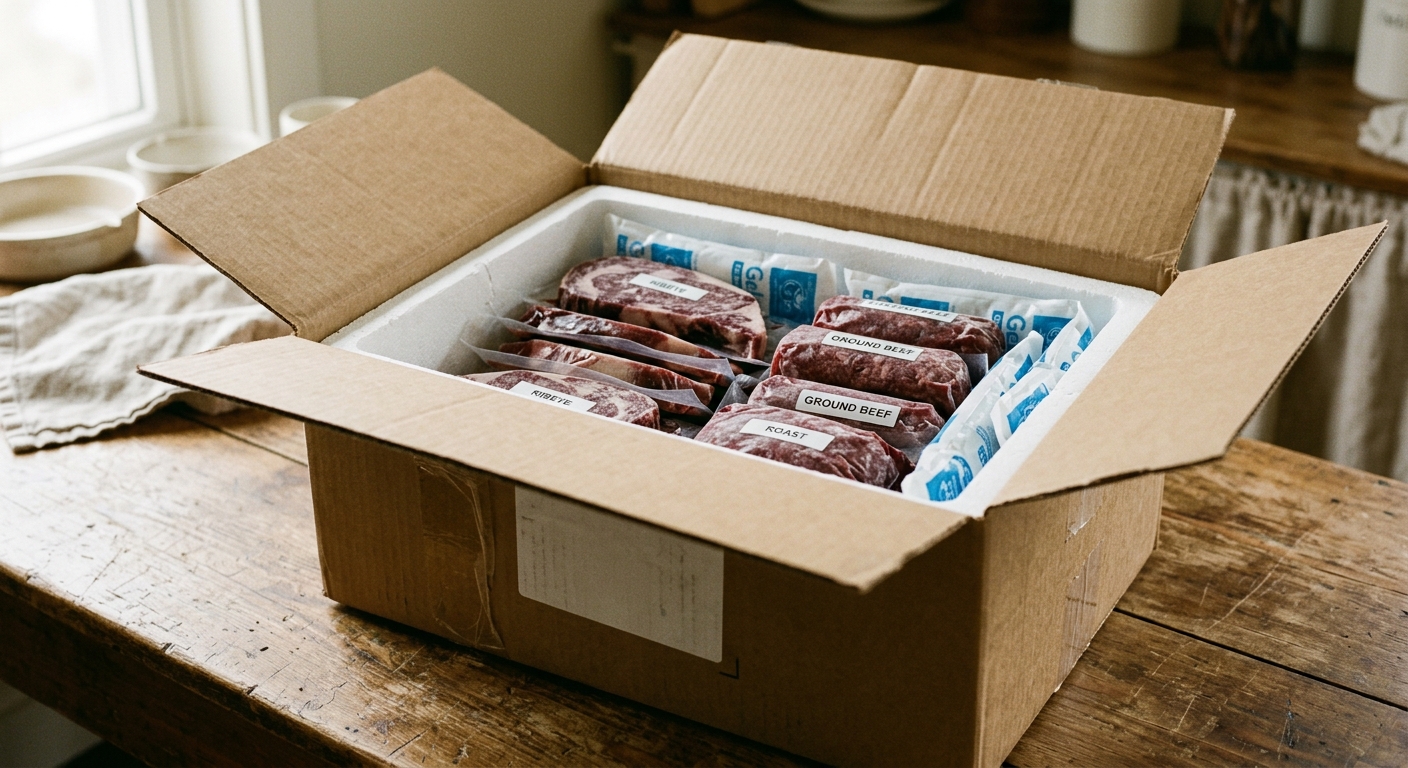
Individual cuts (retail). You sell ribeyes, ground beef, and roasts one package at a time, priced per pound. This captures the highest value per animal and reaches customers who cannot handle a freezer full of beef. The trade-off: it requires inspected processing and more of your time on labeling, inventory, and packing.
Think of it like the difference between selling hay by the semi-load versus by the bale. The load moves fast and easy. The bales earn more per pound, but you handle every one. Most operations start with shares to build cash flow, then layer in cuts and bundles as they build a customer list.
What is the difference between custom-exempt and USDA-inspected?
This is the fork in the road, and it is where people get into trouble. Custom-exempt is cheaper and simpler but comes with a hard legal wall. USDA or state inspection costs more but unlocks how you can sell. Here is the honest comparison.
| Custom-exempt processing | USDA (or state) inspected | |
|---|---|---|
| What you can sell | Whole, half, quarter shares only, by live weight | Any format: shares, individual cuts, bundles |
| Who can eat it | Only the people who owned the live animal | Anyone, retail public |
| Package label | Every package stamped "NOT FOR SALE" | Legal for resale, USDA mark of inspection |
| Cross state lines? | No | Yes (federal USDA), state-inspected varies |
| Can you ship it? | No | Yes |
| Cost | Lowest, kill fee plus cut-and-wrap | Higher, plus licensing |
| Best for | Local bulk shares, word-of-mouth start | Cuts, bundles, online, scaling up |
Here is the nuance that trips up good, honest people. Under custom-exempt, the customer has to own the live animal before it goes to slaughter. If four families split one steer, all four must be owners of record before the kill date, and each pays the processor for their share. You cannot slaughter first and then sell the packages, and you can never sell a custom-exempt package to a walk-up customer. The Niche Meat Processor Assistance Network is blunt about it: custom meat is for the owners' own use, not for sale, period.
This is not legal advice, and rules vary by state. Some states run their own inspection programs equal to USDA, some have cottage-style allowances, some are stricter. Before you sell a single pound, call your state department of agriculture or your land-grant extension office. New Mexico State's Selling Meat Direct to Consumers and the USDA FSIS livestock exemptions guideline are the two documents to read first. Fifteen minutes on the phone with your state inspector saves you from a mistake that can shut you down.
For the weight terms that drive your pricing, live weight versus hanging weight versus take-home weight, I broke those all the way down in how to price your farm products. Read that one next, because pricing is where most producers quietly leave money on the table.
How do you get past the "cash and freezer wall"?
Here is the wall almost nobody warns you about, and it is the single biggest reason good beef sits unsold.
Most of your customers cannot do what a half or whole steer asks of them. A half cow runs $1,500 to $3,500 in 2026 and lands 200 to 250 pounds of packaged meat in their kitchen. That takes 8 to 10 cubic feet of freezer, a dedicated chest freezer, and a check most households simply cannot write in one shot. You are asking a young family to spend two grand and find a second freezer on the same weekend. They love your beef and they still say "maybe next year."
That is not a demand problem. That is a packaging problem. And you fix it by shrinking the bite:
- Quarter shares. A quarter runs about $800 to $1,500 and yields roughly 90 to 150 pounds, needing only 4 to 6 cubic feet, which fits in the freezer on top of the fridge or a small chest unit. Half the cash, half the freezer, twice the buyers.
- Split-halves and "eighths." Team two customers on a half, or offer a true eighth-share for the apartment crowd. You move the same animal, you just widen the door.
- Bundles. A $99 grill box, a $149 ground-beef-and-burger bundle, a "family starter" of everyday cuts. These fit a normal budget and a normal freezer, and they are how a curious first-timer becomes a repeat customer.
- Subscriptions. A monthly beef box at $79 to $129 turns one big scary purchase into a small predictable one. It also gives you the thing every rancher wants and almost none have: revenue you can count on before the animal is even finished.
The commodity market taught buyers to think in ribeyes and pounds of ground. Your job is to meet them where their wallet and their freezer actually live. Bundles and subscriptions also let you balance the carcass, because every animal is mostly hamburger and only a little steak, and you have to sell all of it to make the math work.
Why should you book your processor before anything else?
Because the butcher, not the pasture, is your bottleneck. Small USDA-inspected plants are booked out months in advance, and in a lot of regions the good ones are booked a year out. The USDA itself is rolling out fee reductions in 2026 to push small processors to expand capacity, which tells you how tight it still is.
Get your kill dates on the calendar before you finish a single animal for direct sale. I mean it. Producers who wait until the steer is finished to call the plant end up either holding a fat animal for months, eating the feed cost, or hauling to a plant three hours away. Book the dates first, then work your feeding backward from them. Mississippi State and Missouri Extension both put "establish your processor relationship" at the top of the getting-started list, ahead of marketing, and they are right.
Treat that butcher like the partner they are. Show up on your date, every date. A no-show gets you moved to the back of the line, and the line is long.
How do you find your first customers?
Start with the people who already trust you, then widen the circle. Do not try to reach strangers on day one.
Your warm circle first. Family, church, neighbors, coworkers, the folks who already ask about your beef at the feed store. If you only have two to four head to sell, word of mouth plus a Facebook page can move all of it, and it lets you build a relationship with your locker before you scale.
Show the farm, not just the freezer. People buy the story before they buy the beef. Post two or three times a week: a photo of the cattle on grass, the kids at chores, a plain explanation of how you finish. Mix the fun, the informational, and the occasional "we have quarters available, message me." You are not becoming an influencer. You are just telling the truth about your farm, and truth sells.
Capture every name. Every person who buys, every person who asks, goes on an email or text list. This is your most valuable asset, more than any single sale. When the next batch is ready, one message to that list can sell out an animal.
Farmers markets are a proving ground for cuts and bundles and a face-to-face way to build the list. I wrote a full playbook on turning browsers into buyers there in sell more at a farmers market.
The mistake I see over and over is quitting too early. Repeat business and word of mouth compound, but they compound slowly. The farm that posts for six months straight beats the farm that posts for three weeks and gives up.
Do you need a website to sell beef direct?
Yes, and here is why it matters more than any social account. Social media is rented ground. The platform owns the audience, changes the rules, and can throttle your reach or block your "meat" and "beef" listings whenever it likes. When someone in your area types "grass fed beef near me" into Google at nine at night, a Facebook page does not show up the way a real website does.
A website is land you own. It works while you sleep, it shows up in "near me" searches, and the least expensive customer you will ever get is the one who found you through search, because you did not pay for the click and you do not have to pay again. An online store also lets a customer buy a bundle or a subscription at midnight without you answering a single message.
You do not need anything fancy. You need a clear homepage a fifth-grader could understand, a simple store, your real story on an About page, and a way to capture emails. That is the foundation. If you want to understand exactly how buyers find farms in search and what to fix first, read how customers find your farm on Google.
How do you ship frozen beef without it thawing?
If you go USDA-inspected and want to sell cuts beyond driving distance, shipping frozen is very doable once you know the rules.
- Coolant. Gel packs alone cannot hold sub-zero temperatures, so use dry ice for frozen beef. For transit over 48 hours, combine dry ice with gel packs to stretch the cold life.
- How much dry ice. A typical overnight box (roughly 12x12x12, about 30 pounds packed) needs 3 to 4 pounds of dry ice. A 2-day shipment needs about 5.5 pounds.
- Speed. Ship overnight or 2-day only, and send Monday or Tuesday so nothing sits in a warehouse over the weekend. Aim for the package to arrive still frozen solid.
- Packaging and labels. Use an insulated foam cooler inside a sturdy box, never let dry ice touch the meat directly, put dry ice on top because cold sinks, and mark the box "Perishable." Dry ice is a hazardous material, so it needs a Class 9 UN1845 label on the outside.
Shipping adds cost and risk, so many producers start with local pickup and delivery, then add shipping once cuts and bundles are selling. The RealCold and Niche Meat Processor Assistance Network guides are solid references when you are ready to dial in your box.
The bottom line
Selling beef direct is not one decision. It is a handful of them made in the right order: book the processor, choose custom-exempt shares or inspected cuts, shrink the bite so real people can say yes, find your first customers in your warm circle, and plant a website you actually own. Do those, and you stop selling really nice beef for the price of dog food. You start getting paid what your work is worth.
You do not have to figure it all out at once, and you do not have to do it alone. The strength of a farm is a human being, so you should have one in your corner.
Want to know what you should actually charge? Run the numbers with our free farm pricing tool before you post a single price. Want a second set of eyes on your whole direct-to-consumer setup? Book a free marketing audit and we will show you where the money is leaking and what to fix first.
Frequently asked questions
Can I sell individual beef cuts if I use a custom-exempt processor? No. Custom-exempt meat is stamped "NOT FOR SALE" and can only be eaten by the people who owned the live animal before slaughter. To sell individual cuts to the public, the animal must be processed under USDA or equal state inspection. Rules vary by state, so confirm with your state department of agriculture.
How much does it cost to buy a half or quarter of a cow in 2026? A half runs about $1,500 to $3,500 and a quarter about $800 to $1,500, including hanging-weight price, processing, and kill fees. Effective take-home cost lands near $6 to $12 per pound across all cuts. Your exact numbers depend on your region, breed, and how you finish.
How much freezer space does a beef share take? A quarter needs roughly 4 to 6 cubic feet, which fits a small chest freezer. A half needs 8 to 10 cubic feet, a full dedicated chest freezer. This freezer wall is exactly why quarters, bundles, and subscriptions outsell whole and half shares for most households.
Do I need a USDA facility to ship beef across state lines? Yes. Federally inspected (USDA) beef can be sold as cuts and shipped across state lines. Custom-exempt beef cannot be sold or shipped at all. Some state inspection programs are recognized as equal to USDA but may limit interstate sales, so check your state's rules.
How far in advance do I need to book my processor? Book before you finish your first animal, often months ahead, and in many regions up to a year for small USDA plants. Processing capacity is the real bottleneck in direct beef, not your pasture. Get your kill dates on the calendar first, then feed backward from them.
Do I really need a website, or is social media enough? You need a website. Social media is rented ground the platform controls and can throttle. A website is land you own, it shows up in "near me" searches, and it lets customers buy bundles or subscriptions any time. Social is for reach; your site is for owning the customer.
Want us to get your farm found?
Get a free SEO audit and plan, or try the free tool and get a post in your own words.